

 Treatments










































































































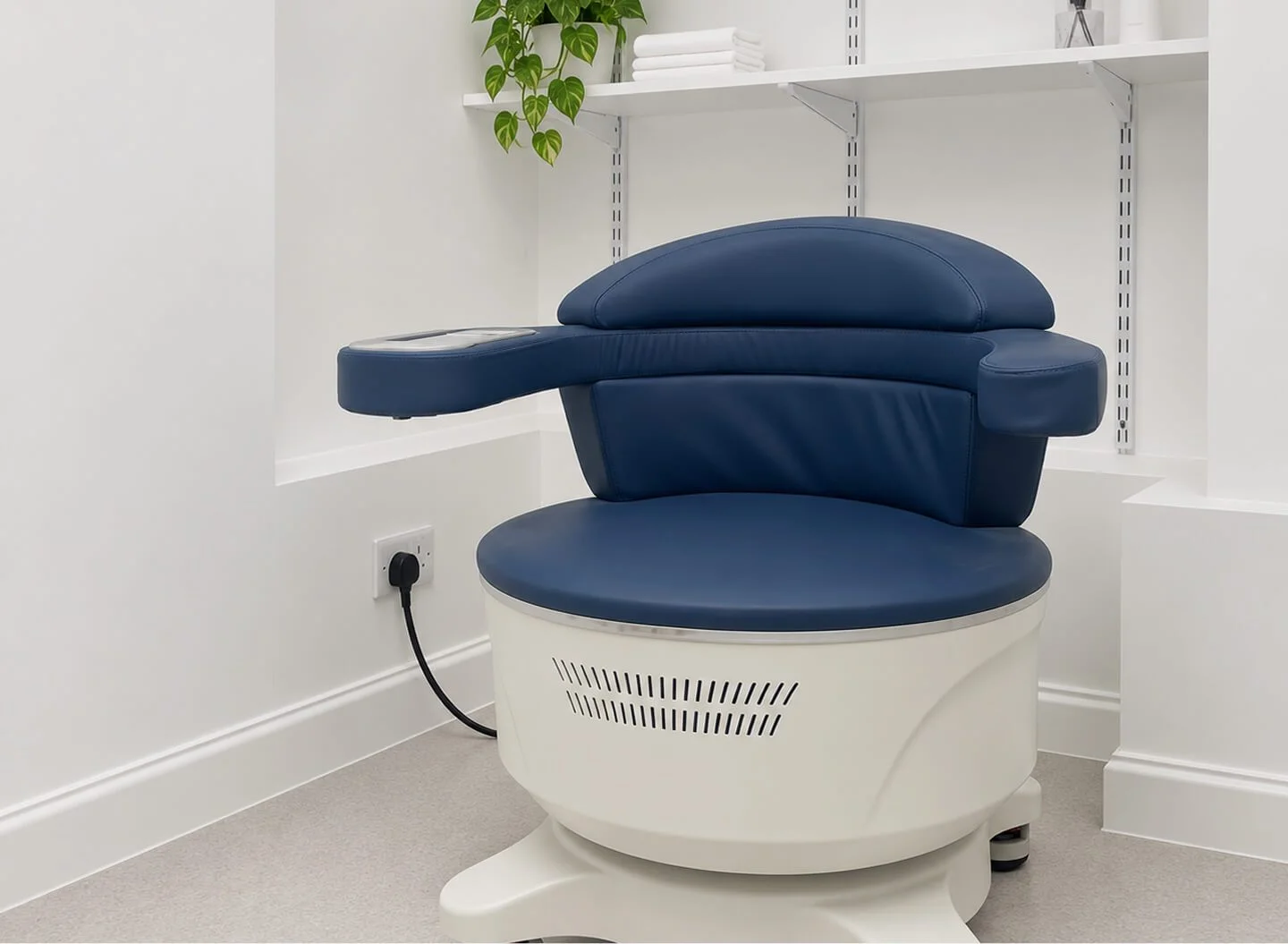
Electromagnetic Pelvic Floor Chair Treatment in Tunbridge Wells
Work towards better bladder and pelvic floor control with 12,500 Kegel-style contractions in 30 minutes — fully clothed, non-invasive and with no planned downtime.
-
Treatment Pricing
Single session£60Six-session course£300 (£50 per session)Twelve-session course£550 (£45.80 per session)

Pelvic floor strength, urinary and bowel control, sexual function and core stability

Electromagnetic pelvic floor chair

Functional Magnetic Stimulation (FMS)

Designed to produce 12,500 Kegel-style pelvic floor contractions per session

30 minutes

6 – 12 sessions, depending on individual needs and response to treatment.

Seated, fully clothed and with adjustable intensity

None

Selected adult women and men following consultation
Why Consider an Electromagnetic Pelvic Floor Chair Treatment?
-
Your pelvic floor supports bladder and bowel control, the pelvic organs, core stability and sexual function. When these muscles weaken or become difficult to activate, the effects can reach well beyond an occasional bladder leak.
-
The chair provides intensive, consistent stimulation without relying on you to perform every contraction correctly or remember repeated exercises throughout a busy day.
-
What Symptoms and Concerns May Treatment Support?
-
Following an assessment, electromagnetic pelvic floor chair treatment may be considered where weakened or poorly coordinated pelvic floor muscles contribute to:
-
Stress urinary incontinence — leakage when you cough, sneeze, laugh, lift or exercise
-
Urge urinary incontinence — a sudden need to urinate that can be difficult to delay
- Mixed urinary incontinence — symptoms of both stress and urge incontinence
- Bladder weakness after pregnancy and childbirth, once postnatal recovery is complete
- Urinary leakage after prostate-related treatment, when medically cleared
- Reduced bowel control or faecal incontinence where pelvic floor weakness is contributing
- Changes in sexual function linked to pelvic floor weakness, including reduced sensation, difficulty reaching orgasm or erectile difficulties
- Pelvic and core instability, including some lower-back or pelvic discomfort where weak pelvic floor muscles may be a contributing factor
- Symptoms associated with mild pelvic organ prolapse, following appropriate clinical assessment
- Pelvic floor rehabilitation after pelvic surgery, when recommended and medically cleared
- Difficulty identifying or engaging the correct muscles, including when a desk-based routine makes regular pelvic floor training harder to maintain
These concerns can have different causes. Your consultation checks whether pelvic floor weakness is contributing and whether chair treatment is appropriate. If not, we will recommend a more suitable next step.

Electromagnetic Pelvic Floor Muscle Stimulation
Functional Magnetic Stimulation (FMS) creates a changing electromagnetic field that activates the nerves controlling the pelvic floor muscles. This produces repeated involuntary contractions while you remain seated and fully clothed. The repeated muscle activity also supports local circulation without direct contact with the skin.
What Happens During a Session?
- No special preparation is normally required. You sit in the centre of the chair in comfortable everyday clothing.
- Your practitioner checks your position and begins at a lower setting.
- The intensity is increased gradually to a strong but manageable level.
- You feel rhythmic contractions through the pelvic floor and may also feel the nearby groin and gluteal muscles engaging.
The intensity can be reduced or the session paused at any time. The sensation can feel unusual at first, but treatment is not expected to be painful.
After Your Appointment
After 30 minutes, you can continue with work, driving, exercise or normal daily activities. There is no planned downtime. Temporary muscle fatigue may occur, rather like the feeling after focused exercise.
How Many Treatments Will I Need?
-
We offer 6- and 12-session pelvic floor chair courses, depending on your individual needs and treatment goals.
-
A typical course involves two sessions per week over 3–6 weeks. Additional sessions may be required depending on your individual response to treatment and any underlying health conditions.
-
Your progress can be reviewed throughout the course, and further or maintenance treatments may be considered where appropriate.
-
Pelvic floor chair treatment is intended to support pelvic floor muscle activation and should not be considered a replacement for professionally advised pelvic floor muscle exercises.
Planning and Maintenance
The timing of your appointments is agreed during consultation and planned around your suitability and availability. After the initial course, your progress is reviewed. One or two maintenance sessions per month may be recommended where appropriate.
What Results Can I Expect?
Possible benefits include stronger and more coordinated pelvic floor contractions, better control of stress, urge or mixed urinary incontinence, improved bowel control where muscle weakness contributes, greater pelvic and core stability, and support for sexual function in selected women and men.
Results vary according to the cause and severity of your symptoms, your starting point and your individual response. Treatment cannot guarantee continence, pain relief, improved sexual function, complete symptom resolution or a permanent result.
Who May Benefit?
Treatment may be suitable for adult women and men when an assessment indicates that weak or poorly coordinated pelvic floor muscles are contributing to their symptoms.
When Treatment May Not Be Suitable
Pelvic floor chair treatment may not be suitable if you:
-
Are pregnant or breastfeeding
-
Have a metal IUD (coil)
-
Are currently menstruating
-
Have a cardiac pacemaker or implanted defibrillator
-
Have metal implants in the pelvic area
-
Have injured or impaired pelvic floor muscles
-
Have recently had surgery or are currently receiving treatment for bladder or pelvic floor symptoms
-
Have reduced or absent sensation in the treatment area
A consultation will be carried out before treatment to assess your suitability and identify any potential contraindications.
When a Different Assessment May Be More Appropriate
An electromagnetic pelvic floor chair cannot diagnose the cause of urinary or faecal incontinence, pelvic organ prolapse, sexual dysfunction, or pelvic and lower-back pain. If your symptoms are new, rapidly worsening, unexplained or require medical, urological, gynaecological or pelvic health physiotherapy assessment, we will explain the most appropriate next step before recommending treatment.
Careful Assessment, Not Simply Access to a Pelvic Floor Chair
Pelvic symptoms can have more than one cause. At rtwskin, treatment begins with a private suitability assessment, not simply access to a chair.
rtwskin is an independent, medically led and CQC-regulated clinic with more than 20 years’ experience in medical and aesthetic care. Treatment is tailored to your comfort, suitability and goals, with honest expectations from the outset.
- A confidential review of your symptoms, goals and medical history
- Treatment recommended only when it is suitable for your concern
- Intensity adjusted gradually to a level you can manage
- A six-session protocol with progress reviewed afterwards
- Honest guidance if another assessment or treatment would serve you better
Related Pelvic Health Support
If your concerns are connected with menopause, vaginal health or other intimate-health changes, you can also explore the wider rtwskin Women’s Health service. Explore rtwskin Women’s Health
Private Treatment in Tunbridge Wells, Kent
Appointments take place at Cobden House Medical Centre, 25 London Road, Tunbridge Wells, Kent, TN1 1DA. The clinic is close to Tunbridge Wells train station and has a small car park in front of the building.
Questions Before You Book
Which types of urinary incontinence may pelvic floor chair treatment support?
Treatment may be considered for stress incontinence, where leakage occurs with coughing, laughing, sneezing, lifting or exercise; urge incontinence, where a sudden urge is difficult to delay; and mixed incontinence, where both patterns occur. Your symptoms are assessed first because not every type of leakage is caused by weak muscles.
Can pelvic floor chair treatment help with faecal incontinence?
It may be considered where weak pelvic floor muscles are contributing to reduced bowel control or faecal leakage. Because faecal incontinence can have several causes, assessment is essential before treatment is recommended.
Does the electromagnetic pelvic floor chair replace pelvic floor exercises?
Not automatically. Pelvic floor chair treatment can provide intensive, consistent muscle stimulation, but exercises or specialist pelvic health physiotherapy may still be appropriate as part of your wider plan.
What if I spend most of my working day sitting?
If you spend much of the day sitting and find it difficult to train your pelvic floor consistently, the chair provides repeated contractions during a 30-minute appointment. You do not need to perform every contraction consciously, and treatment may help you recognise what effective pelvic floor engagement feels like.
Will I need to undress?
No. The treatment is external and you remain in comfortable everyday clothing.
Can I stop or reduce the intensity?
Yes. The setting is adjusted gradually, and you can ask for it to be reduced or the session paused at any point.
How many sessions are in the rtwskin protocol?
A single session is available, but the full course allows your response to be assessed over time.
Can women have treatment after childbirth?
Treatment may be considered once recovery is complete and your practitioner has confirmed that it is appropriate for you. It is not suitable during pregnancy.
Can men use an electromagnetic pelvic floor chair?
Yes. Selected adult men may be suitable for bladder leakage after prostate-related treatment, difficulty engaging the pelvic floor or erectile-function concerns where pelvic floor weakness may be contributing. Medical clearance may be required.
Can pelvic floor chair treatment support sexual function?
Improving pelvic floor strength and awareness may support sexual function in selected women and men, including sensation, the ability to reach orgasm or erectile function. It is not a guaranteed treatment for sexual dysfunction, and other causes may require separate assessment.
Can it help with pelvic or lower-back pain?
Where weak pelvic floor muscles contribute to poor pelvic and core support, treatment may help improve muscular stability. It is not a general treatment for pain, so chronic, new or worsening symptoms should be assessed before treatment.
Can I use the chair after pelvic surgery or for prolapse symptoms?
Sometimes, but only after appropriate assessment and medical clearance. The chair may support muscle rehabilitation; it does not correct an anatomical prolapse or replace specialist medical, surgical or pelvic health physiotherapy care.
What happens after the six-session course?
Your response is reviewed. Depending on your progress and goals, one or two maintenance sessions per month may be recommended.
Start with a Private Pelvic Floor Consultation
If bladder or bowel leakage, urgency, postnatal weakness, reduced sexual confidence or difficulty engaging your pelvic floor is affecting everyday life, book a private consultation to find out whether treatment is appropriate for you.

Medically reviewed by

Dr. Nina Sheffield, MD, Bsc
Director rtwskin – CQC Responsible Person



Modern techniques and equipment to achieve the best results